Search This Blog

Sunday, November 27, 2016

F1 Tech insight - Ferrari’s Azerbaijan aero

FERRARI EUROPE

Ferrari brought both front and rear wing updates to the 2016 Formula 1 Grand Prix of Europe. Sadly they weren’t enough to beat Mercedes, but they did at least help keep the Italian team on the podium, courtesy of Sebastian Vettel’s second place…


In Baku Ferrari introduced a front wing based on the one they debuted back in Russia and used at the last round in Canada (inset). The key difference was that instead of three small chord flaps it featured just two - different in shape and not using the full space allowed by the regulations, meaning lower downforce but less drag.


To balance the new front wing, Ferrari also used a low-downforce rear wing on the SF16-H. The new main plane and flap featured a lower angle of incidence to help boost straight-line speed, while the number of gills on the endplates was reduced.

Source : F1.com

F1 Analysis - Williams’ new shorter nose

BAHRAIN WILLIAMS

Last year Williams were clearly the third-best team. So far this year they are fighting for that position with Red Bull, Toro Rosso and even newcomers Haas.


Among the updates they hope could change all that is this new ultra-short nose which has been in development over the winter and which debuted on Felipe Massa’s car over the Bahrain weekend.


It is far slimmer and more sophisticated than its predecessor, with a small oval inlet at the front that diverts air via short inside channels to the outer edge of the nose. It’s a totally different approach to the S-duct being used by Mercedes and other teams, but like those it helps to energise the airflow around the lower section of the nosecone. Also new on the front wing is the slot in the inner vertical fence.

The new nose was only flown in to Sakhir on Saturday morning, and Massa admitted he had a difficult time finding a balance with it in FP3, hence the team took their time deciding whether to use it for qualifying.

They went with it, and Massa said that it found him some time, even though he was narrowly out-qualified by team mate Valtteri Bottas (using the old nose). Its performance in the race was hard to gauge, given that poor strategy proved Williams’ undoing and that Bottas took a drive-through penalty for his first-lap collision with Lewis Hamilton.

Source: F1.com

F1 Analysis - Ferrari’s rear diffuser evolution

FERRARI BAHRAIN

Car development is always intense over the opening rounds of the season, as the teams get to know their new machines and the areas of potential performance gain.


© Giorgio Piola

In Bahrain Ferrari brought another new update to their rear diffuser. The miniature flaps introduced on the outer rear edges of the diffuser at the end of 2015 (left inset) have undergone a major evolution, with the elements now much larger (main drawing - right inset shows changes from above).

The diffuser’s outer footplate has also grown in size and altered in shape. All these changes work together to help the diffuser produce more downforce. Other revisions to the SF16-H in Sakhir (unseen here) included floor modifications near the vertical turning vanes at the front of the sidepods.

Source: F1.com

F1 Tech insight - Ferrari’s Montreal engine cover

FERRARI CANADA

With its combination of high speeds and numerous heavy braking events, Montreal’s Circuit Gilles-Villeneuve places some rather specific demands on a Formula One car. With the help of renowned technical illustrator Giorgio Piola, we take a look at just one of the changes Ferrari have put in place to help cope…


Since the last round in Monaco, the Italian team have introduced a totally new engine cover and sidepod design. Note in the drawings above how much lower the rear of the new cover is relative to the rear suspension elements (red arrows). The final section of the Montreal cover is also more open than before in order to improve hot air extraction.

Source : F1.com

F1 Tech insight - Mercedes’ Montreal updates

MERCEDES CANADA

Ferrari may be getting closer, but that’s not because Mercedes aren’t trying. Despite winning all bar one 2016 race to date, the reigning world champions show no sign of resting on their laurels, as illustrated by the latest developments seen on their car in Canada...


L-shaped turning vanes

The F1 W07 Hybrid has evolved further since Spain, and has even seen some totally new solutions - like these long, L-shaped turning vanes (left arrow) under the chassis. They exploit the same aerodynamic principles as the vanes already seen under the barge boards in front of the car’s sidepods (below).


Front wing fins

On the front wing’s rearmost flap, Mercedes introduced this unique solution. A series of small parallel fins (red arrow) help to better direct airflow on the outside of the car’s front wheels. It was trialled first on Hamilton’s car, then on Rosberg’s too, the latter also using Canada practice to test a new front wing designed for the low-drag requirements of the upcoming Baku City Circuit race.


Source : F1.com


F1 Tech insight - key aero updates in Belgium

TORO ROSSO FERRARI BELGIUM SAUBER

With this weekend's 2016 Formula 1 Belgian Grand Prix experiencing unusually hot conditions, balancing downforce, tyre temperatures and tyre wear has been even harder than normal. Here's a handful of changes that teams have brought to Spa-Francorchamps in their bid to find that magic formula...

Sauber C35 - new nose and front wing

With the recent purchase of the team finally freeing up much-needed development funds, Sauber debuted what almost amounted to a B-spec car in Belgium, starting with this totally revised front wing. While the shape of the nose (1) is unchanged, the pillars (2) are very similar to those on the McLaren, with a vertical tail in their lower section. The wing itself features six full-length flaps, following Red Bull’s design philosophy, while the upper flaps (3) are again closer in shape to those seen previously on the McLaren. Finally, the large step at the base of the endplate (4) apes the shape used by Mercedes.


Toro Rosso STR11 - updated front wing

Toro Rosso brought two front wings to Belgium, both based on the new design introduced at the last race at Hockenheim. The key differences are the last flap, which features a reduced chord (inset) and one cut-off element (rearmost in main drawing) that was used for qualifying and the race.

Ferrari SF16-H - rear wing configurations

Friday in Belgium saw Ferrari using a low-downforce rear wing as seen in Baku (left drawing). But for qualifying and race they opted for more downforce, with a wing (right drawing) featuring four gills on the top of endplates, and bigger wing elements and flaps, with a greater angle of incidence. It proved a good solution on Saturday, but its real value could be over Sunday’s race distance when the team want to place less stress on their tyres.

Source: F1.com

F1 Tech insight - Red Bull’s low-downforce Spa set-up

BELGIUM RED BULL

Red Bull again featured on the podium on Sunday, with Daniel Ricciardo splitting the Silver Arrows in Belgium to help his team pull further ahead of Ferrari in the fight for second place in the constructors’ championship. But what was the secret of their Spa-Francorchamps success?


Red Bull were the only team to opt for a very low-downforce set-up. In the drawing above we see the rear wing was even smaller than the one they used for the Russian race in Sochi. The main plane and flap have a shorter chord and a lower angle of incidence, whilst on the endplates the diagonal strakes have been removed - all reducing downforce and cutting drag.

It was a similar story with the front wing, as shown in the drawing above. For Spa, Red Bull brought back the experimental design tested briefly earlier this year in China, when it featured a serrated second flap (red arrow, left). Here it was reintroduced with a shorter chord to the final flap (red arrows) and minus the serration. Both Ricciardo and team mate Max Verstappen had this configuration for qualifying and race.

Source:F1.com

F1 Tech insight - McLaren’s engine cover camera

UNITED STATES MCLAREN

McLaren have been running a new rear diffuser in Austin this weekend, with four vertical splitters in the side channels. But perhaps the most important changes on the MP4-31 were elsewhere…


On the back of the car were various monitors (yellow) to measure deflection. Highlighted here is a small camera (red arrow) mounted on top of the rear suspension upright and pointed at the engine cover, to allow the team see how the cover is affected by deformation and heat. To make the images from the camera clearer and easier to analyse, a thin mesh skin (silver area) was also applied to the cover. This work is unlikely to lead to major changes on this year’s car, but could provide data invaluable to the development of next year’s.

Source:F1.com

Tech insight - Mercedes test a first in front wing development

MERCEDES MALAYSIA
 
Mercedes’ rivals will be hoping that 2017’s major rule changes might provide a chance to leapfrog the world champions. What is certain is that the Silver Arrows are already doing everything in their powers to prevent that…


© Giorgio Piola


On Friday in Malaysia they briefly trialled an interesting development obviously aimed at next season - and one never seen before. Shown above, this new front wing looks unremarkable at first glance. Look closer and you will see the endplate is totally separate to the main plane (red arrow, yellow highlight). Not dissimilar concepts have been used before on rear wings - Toro Rosso introduced open gills at the top of their rear endplates, an idea then copied by Sauber, and seen at Sepang on the McLaren. 

However, at the front it is far more difficult, with huge implications for stiffness and flexibility - something that is rigorously checked with a specific FIA deflection test. The advantages will come from the solution’s sophistication in controlling the airflow vortices on the side of the wing.

Source: F1.com

F1 Tech review - Mercedes suspension in Singapore spotlight

MERCEDES FERRARI SINGAPORE

It may be relatively late in the season, but teams continue to bring changes to their current cars - though it was one slightly older modification that was the talk of the technically minded at the 2016 Formula 1 Singapore Airlines Singapore Grand Prix...


Mercedes F1 W07 Hybrid - front suspension packaging

Be it due to possible correspondence between rival teams and the FIA, or simply specialist media speculation, Mercedes’ front suspension was in the spotlight again in Singapore - even though it’s a layout first seen at the Chinese round earlier in the season. The talking point was the packaging of the team's innovative, hydraulic third suspension element (inset, above), housed transversely in the upper chassis bulkhead, which facilitates better control of ride height and roll.


Mercedes have pushed the regulations to the limit here, cleverly utilizing both a dimensional allowance added last year so that Manor (then Marussia) could use an adapted version of their previous season’s car, and the familiar vanity panel (see drawing above) on top of the chassis - originally introduced to cars in 2013 to smooth out the infamous ‘stepped’ noses. 

This aggressive interpretation of the rule book has allowed the world champions to house their complex suspension componentry - and critically the access needed to adjust it - high in the chassis, whilst still respecting the regulations on chassis height. Other teams have a third suspension element (though few are hydraulic) and most still use a vanity panel for suspension access, but none has been so extreme in their design philosophy.


Interestingly, since the Hungarian round in July, Mercedes have also placed a cover (right arrow, above) on top of the hydraulic damper, effectively hiding it from view when the vanity panel is removed. (The left arrow shows the pipes used to check the pressure in the braking system.)

Source: F1.com

Tech review - 2017 testing well underway in Austin


UNITED STATES MERCEDES FERRARI MCLAREN

With just one rounds of the 2016 season remaining, it’s perhaps no surprise that teams are now utilising practice sessions to gather data for 2017 design solutions. Here’s a handful that were on show in the United States…


McLaren MP4-31 - front wing development

Like Mercedes, McLaren have been trialling front wing developments and this revised solution looked very much like a first step towards what could well be seen on the Woking team’s 2017 machine. As with Mercedes, the big changes are concentrated on the outer part of the wing, as this is the area - beside the endplate, in front of what will be wider tyres next year - crucial to controlling airflow over and around the front wheels. Highlighted in yellow, you can see the footstep near the endplate is gone, with the main plane now almost totally flat - without the previous U-shape (red arrow). Note also the extra vertical fences under the main plane.


Mercedes F1 W07 Hybrid - floating front wing endplate

In Austin it was Nico Rosberg’s turn to run the innovative endplate design seen briefly on team mate Lewis Hamilton’s car at the previous round in Malaysia. This front-on view from below the wing clearly highlights (in yellow) how the main plane is detached from the endplate for around the first 20cm.


McLaren MP4-31 - rear diffuser

It wasn’t just the front of the car coming under McLaren’s consideration in Austin. At the rear the team are still pushing hard with development work, including this new diffuser with a return to two vertical splitters (red arrow), not dissimilar to those seen in the days of the blown diffuser.


Ferrari SF16-H - T-tray winglet

On Friday in Austin Sebastian Vettel tested a different configuration of under-chassis aero, with the winglet shown here (red arrow, left) no longer attached to the car’s underside, but instead attached directly to the T-tray (area indicated by dotted red arrow) as Red Bull and McLaren have been doing this season. Unfortunately, heavy vibrations over kerbing caused the winglet to detach whilst on track, forcing Vettel to revert to the previous layout, as tested in Malaysia and race in Japan.

Source: F1.com

Saturday, November 26, 2016

Trump is a 'game changer' for N.A. auto industry, Marchionne warns


Fiat Chrysler CEO Sergio Marchionne, left center, with Matteo Renzi, Italy's prime minister, right, during the Italian carmaker's association conference at an Alfa Romeo assembly plant in Cassino, Italy, on Thursday. Photo credit: BLOOMBERG


President-elect Donald Trump’s critical stance toward free trade could affect Fiat Chrysler Automobiles NV’s business in North America, according to the Italian automaker’s chief executive officer Sergio Marchionne.

Trump’s election “certainly is a game changer, mainly because I think that there are a number of conditions in the U.S. which are not yet spelled out,” Marchionne told Bloomberg Television at an Alfa Romeo plant in Cassino, Italy.

Statements Trump has made about trade are “a big issue” because of the North American Free Trade Agreement’s impact on Fiat’s operations in the U.S., Mexico and Canada.

Trump frequently slammed Nafta during his campaign, describing it as the worst deal ever and blaming it for U.S. job losses.

The president-elect has singled out Ford Motor Co. for making cars in Mexico and has called for imposing a 35 percent tariff on products made by companies that move their production from the U.S. to other countries.

Since 2010, nine global automakers, including General Motors Co., Ford and and Fiat have announced more than $24 billion in Mexican investments.

Fiat, which generates the lion’s share of its profits in North America, assembled about 17 percent of all the vehicles it made in that region in Mexico in the first ten months, according to Kevin Tynan, Bloomberg Industry senior analyst. Almost all of those cars were sold in the U.S. and Canada.

“The company would incur hefty costs if the Trump administration is able to enact a 35 percent levy on vehicles and parts imported into the U.S.,” Tynan said.

Marchionne warned in June that a Trump victory could impact the carmaker’s production options in North America, depending on the way he manages NAFTA and whether he supports protectionist views. The Fiat CEO said he hasn’t spoken with Trump but will work with the new administration.

The change in U.S. leadership is not only impacting the carmakers’ trade prospects. Fiat shares have gained 14 percent since the Nov. 8 vote, with a jump three days later after Trump chose a prominent climate change skeptic to lead his EPA transition team.

That fueled speculation that the new administration may loosen fuel-economy rules, which would benefit makers of conventional engines. In addition, gains by the U.S. dollar since the election are positive for Fiat, Marchionne said.

Brexit, F1 exiting the UK ?


The fact that the Formula One group may have to pay more British tax in the future, as revealed by a journalist who prides himself on his close connection with Bernie Ecclestone, is a story that is unlikely to make life any easier for Mr E. The story reveals that Formula One pays very little tax, which is not news to anyone who has looked at how CVC Capital Partners (and similar private equity firms) operate. They squeeze money from every possible source. Profit is the heroin of the people in private equity. Perhaps in their world such a story is a source of pride, but it is unlikely to impress the people who are in the process of buying the business. They understand this stuff. John Malone and his crew are known for their complex and clever deals and their remarkable success.

F1 is a self-absorbed world which thinks that the universe rotates around the sport. It doesn’t. Nicolaus Copernicus was right. Malone and his people regularly deal with transactions which dwarf the F1 sale – and they know how to do it. Weeks of due diligence were gone through before Liberty committed to the transactions, and the goal of this work was to discover exactly what the company was acquiring, what obligations it was assuming, the nature and extent of the liabilities, difficult contracts, litigation risks, intellectual property issues and, of course, taxation arrangements. Due diligence generally includes questions being asked about tax agreements and demands to see all correspondence with tax authorities.

So the fact that the future taxation might change should not be new to a company like Liberty and having this pointed out to them in public serves no good purpose except to irritate them. Perhaps it earned the writer money to eat, but is it not going to be seen by some as an attempt to disrupt the process that is being gone through at the moment? One presumes that Mr E does not wish people to get the idea that he is doing things that might cause upset. The buyers and the sellers just want to get on and do business.

Liberty did tell analysts that Delta Topco had a very efficient tax structure, which it does, but if there is a more efficient structure then investors will be only too happy to see such changes implemented. However, until the various clearances come through, Liberty is not going to be doing anything that might cause problems with the market regulators. If/when the tax structure needs to be modified, it will be, but this can only happen after the deal is completed. Stock analysts will look at such matters if or when the company declares that they are necessary.

There are, of course, plenty of ways to solve such a problem, if indeed there is a problem. The obvious move being to re-register the companies concerned in new jurisdictions, if the current tax authorities do not wish to come to suitable arrangements with sweetheart deals, exemptions, and loopholes of various kinds. Governments do not want to lose big high profile businesses, which employ people, or are prestigious. We have seen this recently with Nissan in the UK.

Moving profits offshore is common practice in the corporate world and while governments may not like it, there is little they can do except to try to close down the tax havens. However, a lot of countries see the value in offering very competitive corporate taxation rates and do not care what the rest of the world thinks. For now, however, tax havens are completely legal if the companies are transparent in their use of them. According to surveys that have been done in recent years, American multinational corporations reported $47 billion in profits to Swiss subsidiaries in 2010 and just short of 30 percent of Fortune 500 companies have subsidiaries in Switzerland. If a Swiss registration is not deemed a good idea, there are many other options, including the Bahamas, Bermuda, Panama, Hong Kong, the Cayman Islands, Mauritius, Luxembourg, Jersey and so on. Moving businesses abroad can cause job losses. Still, it can also be very useful because it can provide the buyer with the opportunity to do away with existing structures (and people) and to build the company that they want, where they want it, rather than taking over what someone else created around different goals and strategies.

What is really interesting in the world at the moment is that there is a push going on by some governments to attract business by cutting corporate taxes. UK Prime Minister Theresa May is said to be planning to lower corporate rates from 20 percent to 17 percent by 2020. President-elect Donald Trump suggested that if he was elected, corporate taxation could drop from 35 percent to 15 percent. But, neither country will be able to compete with Ireland, for example, which offers 12.5 percent, while some tax havens have zero tax, or are willing to negotiate. 

The knock-on effect of this is that governments often negotiate as well, in order to keep the companies involved in their countries. There is, in fact, a very solid argument for corporate taxes to be cancelled altogether, as they do not contribute much to national budgets. The Organization for Economic Cooperation and Development says that the average contribution of corporate taxes in developed nations is only 2.8 percent, while both the UK and the US have even lower numbers than that. The argument is that if corporation taxes are abolished, business will boom, more people will be employed and money can be made in other ways.

In other words, Formula One could, if necessary, complete its own version of Brexit, by exiting the UK. Thus the UK government might argue that getting a couple of hundred million is better than getting nothing and losing jobs and prestige… It may not be perfect, but the alternative is clearly not better.

When it comes to investors, when the time is right, the numbers will either stack up or not. The average investor does not care whether a company is headquartered in South Dakota, Appenzell Innerrhoden or at the Sharjah Airport Free Zone, so long as the business does well and they make money. End of story.

by Joe Saward

Friday, November 25, 2016

Manor F1 for sale ?


I hear from various sources that Manor is in discussion with at least one potential buyer. This is no great surprise. Talks have been going on quietly for months with various potential owners. The team was 10th in the Constructors’ Championship thanks to Pascal Wehrlein’s 10th place in Austria, but 10 days ago in Brazil Sauber went ahead, as a result of Felipe Nasr’s ninth. There is still only one point between the teams, although Manor needs two to go ahead as Sauber has a much better count back of results outside the top 10. Is ninth place in Abu Dhabu doable? Who knows? A multi-car crash can stir the pot…

If that doesn’t happen, Manor needs to do something. The team stands to lose about $11 million in prize fund revenue in 2017. It could raise around $20 million next year from drivers and it still has around $27 million in remaining prize money, but that is not enough to do the job properly and the danger is that it could lose that $27 million at the end of 2017, which would make the business unsustainable. Team owner Stephen Fitzpatrick is in no position to fund the team himself, although he has loaned it money. His Ovo Energy company in the UK is involved in the highly competitive gas and electric market where prices are rising fast. It’s a tough market as he is up against what are known as the Big Six (British Gas, Npower, EDF, Scottish Power, SSE and E.ON). Ovo has just turned its first profits, but these were largely due to the sale of its metering unit business. 

Nonetheless, the company is growing, but not enough to allow any support for an F1 team. Time is also a problem and Fitzpatrick is rarely seen at races, leaving the team to be run by CEO Thomas Mayer and team principal Dave Ryan. Fitzpatrick would like to keep hold of the business because he believes that teams will have much higher value in the longer term, but finding sponsorship for a back-of-the-grid F1 team is tough and thus they must rely largely on prize money and driver-related fundin, unless there is a wealthy owner willing (and able) to cover losses.

Selling the team is thus the best option, although early discussions pre-Brazil valued the team too highly with Fitzpatrick wanting almost twice what the potential buyer was willing to offer. His demands will likely moderate now, as his primary goal is to avoid losing money. This will no doubt lead to some lively negotiation.

Elsewhere in F1, there is a sense that things are beginning to line up for commercial negotiations to take F1 onwards from 2020. The new owners still need to finalise the details of the sale and find the right people to run operations but once that is done, then thoughts will turn to the future. The big teams are already aligning to try to present a united front, although Renault already has a deal beyond 2020 and so will be something of a spectator in this respect. 


Everyone would benefit from the arrival of new manufacturers and so the primary consideration should be to freeze the engine formula for at least five years to give newcomers the chance to join the party.

However, nothing much is going to be done until Liberty Media gets the regulatory clearances required, so for now this is the priority, the primary deal being a definition of how Liberty and the FIA intend to work together. The sport needs better regulatory governance and Liberty will probably be happier if they are left to do only commercial stuff. Being bogged down in the sport’s political quagmire will not help anyone.

By : Joe Saward

Mission impossible Wehrlein at Sauber


I read a story today suggesting that Manor driver Pascal Wehrlein has emerged as the leading candidate for Sauber’s second Formula 1 seat in 2017. Maybe I’m off the pace, but this is not the story I am picking up.

Yes, Wehrlein is in the frame, but it will require Mercedes to stump up cash at a level that they are unlikely to agree to. Sauber is not interested in engine deals and just wants finance. The logic of this may elude Mercedes, but it is part of a three-year recovery plan that the Swiss team has formulated. The 2017 season is all about getting points early on through reliability, hence the engine choice of a 2016 Ferrari, while others struggle to get newer 2017 engines right, and then as solid a financial year as possible, whilst preparing for something better in 2018, recruiting new staff, investing in facilities and so on. What that something is remains to be seen, but clearly there is long-term thinking going on that looks beyond the survival mode in 2017. The story also suggested that all is well between the team and Felipe Nasr and that the problem comes because of his sponsors, but again that is not what I am seeing. I see a relationship which is anything but happy, which is a shame because it would be best for both sides if they could stay together. Maybe they will sort it out. Felipe’s performance in Brazil was very good for everyone and pethaps it will help to build bridges, but as of now I don’t see anything being fixed. Nasr is pretty short of choices but for the relationship to continue Sauber needs to believe more.

Mercedes boss Toto Wolff and Sauber’s Monisha Kaltenborn did meet to discuss Wehrlein in Brazil, but by all accounts it was not a very productive meeting. Obviously, Wehrlein would like to move into a more stable environment than Manor (which is now out of the top 10 and thus worth less than before in any sale), but he doesn’t seem to have many choices. Mercedes will help the team on power unit costs, but it is not going to get into any junior team scenario, although this has been discussed. Mercedes does not need to do this, but still wants to find Wehrlein a berth, as it still believes, despite the recent Force India setback, that he is potentially a top driver. The value of junior teams is that they provide top teams with cheap talent, but this only works if the development process doesn’t cost too much. Thus if Mercedes wants Wehrlein to continue to develop, it must either pay what Sauber wants, or it must find someone to buy Manor and guarantee its stability. Investing in an F1 team is still a gamble but it is one that super-rich people can, perhaps, see value in. The problem is not the purchase price but rather the running costs and as sponsorship is difficult these days, it is B2B strategies, pay-drivers and junior team money that keep these operations afloat. 

The most likely scenario is a deal with Esteban Gutierrez, who has money to spend but has already been at Sauber and is not in demand there. Thus a Gutierrez and Wehrlein pairing makes sense at Manor, with Jordan King perhaps supported by his sponsors as third driver, going to all the F1 races and getting immersed in the sport, in preparation for 2018. if this doesn’t happen, Wehrlein could end up as Mercedes third driver and sit out the year. The bad news is that with Mercedes cutting back to six cars in DTM there are no spaces there, and indeed several drivers are going to lose out there as there are not enough cars to go around and Edoardo Mortara has already been signed to join the party. there has slso been talk of Antonio Giovinazzi being signed by Mercedes, but there really is no room for him, unless there is some bloodletting at HWA. I expect Giovanazzi to turn up somewhere in F1 next year, in a third driver role.

So who goes to Sauber? The man who seems most likely at the moment is Rio Haryanto, but he must come up with cash, rather than promises. He did a surprisingly good job against Wehrlein at Manor earlier this year, but dropped out as the Ocon Express passed through on the main line. This is Haryanto’s last chance because if he fails to deliver money twice the F1 world will shutter up for him in the future. The Indonesians have been through an educational process in the last 12 months and must now either put up, or shut up. Haryanto is a nice prospect for the country and so they should jump on his bandwagon. Right now, it is a seller’s market in terms of F1 seats, so there is no great need to hurry and so we shouldn’t expect any rapid announcements, unless people hit the financial targets being requested.

 by Joe Saward

Wednesday, November 23, 2016

Indy Car news - new driver line-up in 2017 for AJ Foyt Racing


AJ Foyt Racing has confirmed that it will have a completely new driver line-up in 2017 with Takuma Sato and Jack Hawksworth being replaced by Conor Daly and Carlos Munoz. The team will continue to supported by ABC Supply, which is now the longest active major sponsor in IndyCar, having been with the team for 12 seasons. Sato will switch to Andretti Autosport, thanks to his support from Honda, while Hawksworth will leave IndyCar and will race for Lexus in the IMSA WeatherTech SportsCar Series.

Tuesday, November 22, 2016

ECCLESTONE: THE F1 RULEBOOK SHOULD BE RETITLED DON’T RACE


Image : Keith Rizzo - http://rmiworldwide.com

It is no secret that F1 supremo Bernie Ecclestone is no fan of the sport’s current rules, saying that they prevent drivers from being able to race properly.

“The regulation book should be retitled ‘Don’t Race’,” he said. “They are written in such a convoluted way and there are so many that nobody, including the drivers, knows the right thing to do.”

“The proper drivers are frustrated; so are the viewers, and so am I. It is crazy. We need to make it easier for drivers to race fairly.”

“I don’t think they should deliberately bang wheels, but if they are racing each other and they go close and touch, so what? I often wonder if some of these guys want to race or just be out there in an F1 car,” ventured Ecclestone.

The sport’s boss has lobbied strongly for rules to be simplified if not scrapped altogether. His influence on the matter at the recent F1 Strategy Group meeting resulted in FIA race director being mandated to revise the rule book ahead of next season.

“The rules must be written so that I understand them,” insists Ecclestone.

Monday, November 21, 2016

MALAYSIA TO HOST ITS FINAL GRAND PRIX IN 2018


Malaysia will not host a Formula One Grand Prix after the current agreement expires in 2018, the country’s tourism and culture minister said on Monday.

“After 2018 no longer,” Nazri Abdul Aziz told reporters in parliament when asked about reports that the country was considering halting the annual race.

“(From the) longer term perspective, it’s probably the correct decision because it’s more expensive and no longer that attractive,” the minister added, according to audio recordings of the comments heard by Reuters.

Malaysia had been considering cancelling the race due to declining ticket sales and TV viewing figures.

Earlier in the day, Formula One supremo Bernie Ecclestone has cast doubt over the future of the sport in Southeast Asia by telling a German magazine that Singapore no longer wanted to host a grand prix after its current deal expires next year.

The Malaysian Grand Prix was last held in October, when Australian driver Daniel Ricciardo claimed his first win of the season.

State oil and gas firm Petronas are the title sponsors for the F1 race in Kuala Lumpur. The company has been hit hard in recent times by the tumble in oil prices.

ECCLESTONE: TWO 40-MINUTE RACES WOULD BE GOOD FOR F1


Formula One supremo Bernie Ecclestone believes the sport could be made more attractive by ditching the current one-race format for two shorter races, he said in a Sunday newspaper interview.

Ecclestone, 86, believes F1 would appeal more to modern audiences, sponsors and advertisers if there were two 40-minute races, separated by a gap during which drivers could be interviewed.

But he questioned whether the sport’s decision-makers have the “courage” to make such a seismic change to the traditional schedule.

“People have a much shorter attention span and a lot of sports are looking at introducing shorter forms of their games,” Ecclestone, the F1 chief executive, told the Sunday Times.

“The television audiences went up for Brazil. We had a long race with the heavy rain and a couple of crashes, but that meant we had two starts because of the red flags and people tuned in.

“We need to look at the traditional concept of one long race. Two 40-minute races with a 40-minute break in the middle when the drivers could be interviewed, cars worked on, would be attractive to viewers, the TV companies, the sponsors, and advertisers would love it.

“Cars would qualify on a Saturday as usual for the first race and that would set the grid for the second. It would shake things up with lighter, faster cars. But I don’t know if we have the courage to change. Times change though and it is something we must look at.”

“All American sports have time-outs built in, mainly because American audiences can’t concentrate. They grow up with everything in 15-minute segments on TV. People are the same everywhere now,” mused the F1 chief.

Friday, November 4, 2016

Audi Motorsport in F1 in 2018 ?


November 4, 2016 by Joe Saward


So Volkswagen has walked away from the World Rally Championship and its sister brand Audi has left the World Endurance Championship, leaving another sibling brand Porsche to dominate the dance floor.

Audi says it is going to get involved in Formula E, but leaving Le Mans for the all-electric championship is a bit like quitting the Bolshoi in order to star in a clog dancing contest at the Frinton Summer Theatre.

So what is going on? Yes, the VW group needs to save some money to pay for its transgressions relating to fiddling emissions and it said last week that the cost of that scandal has now reached $20.7 billion. Despite this and a drop in profits, the firm is still going to meet revenue projections this year of more than $200 billion. It does need to focus on cutting high-cost operations in Germany to help to pay for the planned shift to new ranges of electric and hybrid cars. While one can understand the need for cuts, the company still needs to advertise its products and Formula E is not going to do that on a global scale, nor will it promote hybrids.

What’s really interesting is that the lead engineer of the original Toyota Prius project, Satoshi Ogiso, has recently been telling Forbes that the cost of hybrid cars is now dropping below both diesel and electric. Diesels have been huge in Europe because they were seen as the only cheaper way than hybrids to meet emission regulations. With diesels now getting expensive new emission systems, their business case is crumbling. Ogiso also doesn’t believe that electric cars will become the dominant force for at least 20 years, because of the cost of developing long distance batteries. He feels that there will now be a lot of investment in battery research – but a lot more hybrid sales, particularly if the price of oil goes up. A lot of European car firms are busy adding hybrids and plug-in hybrids to their ranges in expectation of this trend.

Could it be that this demolition of VW’s sporting programmes is actually the first step towards a major hybrid sporting programme for the company in 2018? And is there any place to do this cost-effectively other than in F1? As I have written elsewhere, I don’t understand Red Bull’s apparent lack of any long-term engine strategy in F1 and I cannot help but wonder if Audi and the Austrians will not take us all by surprise in a few months from now, once it has agreed deals with its powerful unions over cost-cutting.

Saturday, October 29, 2016

MINISTER WANTS TO DITCH F1 RACE TO HELP MALAYSIAN DRIVERS


jazeman-mercedes
Youth and Sports Minister Khairy Jamaluddin today expressed his support for a temporary halt to Malaysia hosting the Formula 1 races.
Addressing the matter via his Twitter handle @Khairykj, the minister said there were many compelling factors to support the idea, including high costs and limited returns. He said that when Malaysia first began hosting the F1 races in 1999, it was the first Asian country outside of Japan to do so.
On a question as to why the Singapore Grand Prix had in contrast enjoyed success, Khairy said the Singapore leg benefited from its novelty factor. “It’s a night race in the city (which is done) no where else in the world. Even then, (their) ticket sales are down,” he said.
Khairy maintained that Malaysia should continue to host the MotoGP, which has maintained a sellout crowd. The Moto 2 and Moto 3 races, he said, also has the added boost of having Malaysian riders. The minister said SIC could instead also spend more on development and increase public access to track days.
“Local racers such as Jazeman Jaafar (pictured above), Nabil Jeffri and Akash Nandy are having a tough time getting sponsors. A fraction of the F1 hosting fee can help them and more,” he said.
Jazeman is a driver with HTP Motorsports in the Blancpain GT Series and the Intercontinental GT Challenge. Nabil Jeffri races for Arden Motorsport in GP2.
With regards to the F1 grand prix Khairy insisted, “Now, there are so many venues. There is no first-mover advantage; it’s no longer a novelty,” he said.
Khairy cited reasons such as declining ticket sales and TV viewership figures, as well as foreign visitors now having the option of seeing the races in Singapore, China and the Middle East.
His comments came in the wake of the revelation by Sepang International Circuit (SIC) chief executive officer Datuk Ahmad Razlan Ahmad Razali, who said SIC is mulling the future of the race in Malaysia.
Razlan had said that a special meeting would be held this week with SIC’s major stakeholder, the Finance Ministry, with regards to the future of the sporting event in Malaysia. He said consistently declining F1 ticket sales and TV viewership figures were among the factors behind the move.
Meanwhile, Khairy engaged Twitter users on the subject, and fielded questions. He said SIC should bid for less costly races, like the Japan GT, in response to a query on what can be done to avoid turning the Sepang circuit into a ‘white elephant.’

Thursday, October 27, 2016

ECCLESTONE: NOBODY IS GOING TO GET KILLED


ECCLESTONE MAGULLADO Y ANUNCIANDO RELOJES
Formula 1 supremo Bernie Ecclestone, no stranger to controversial comments, has suggested building walls on racetrack corners to add a greater sense of danger.
The remarks are unlikely to sit well with, or be treated seriously by, drivers and the governing FIA, who have worked for decades to improve safety in a sport whose past is littered with fatalities.
“In [the old] days — and it can’t happen again — people would come to a race and think somebody could get killed,” Ecclestone told The Times. “[They would think,] ‘He’s a bloody lunatic. He’s going to get it.’ Today they know they come to a race and nobody is going to get killed — which is good.
“But if somebody is running a circus and they have a high-wire act that is 15 metres up, people go there and say, ‘Crikey’. If it was a metre off the ground, they’d say, ‘I can do that.’
“You know why people like Max Verstappen? Because he is a racer. And when he races, people complain that he puts one finger up to his rivals, which is good. I told Jean Todt [the FIA president] that we should really head up our sporting regulations, ‘Don’t race because you’re going to get punished’.”
Baku City Circuit, Baku, Azerbaijan. Saturday 18 June 2016. Felipe Massa, Williams FW38 Mercedes. Photo: Glenn Dunbar/Williams ref: Digital Image _V2I9534big picture
However, he suggested races were now in danger of appearing too safe, with drivers exceeding track limits without suffering any consequences.
“I wanted to build 40cm walls around the corners,” Ecclestone said. “They keep saying drivers mustn’t go off the road. I promise they won’t. They didn’t go off the road in Baku this year and I rarely see them go off in Monaco or Singapore. And if you think about it, they are probably some of the good races.”
Ecclestone said Formula One’s street races in Baku, Monaco and Singapore, with walls and metal fences, concentrated the minds and the racing was still good.
He said the current crop of quieter, turbo-hybrid cars also looked easier to drive than the noisy beasts of old and compared the situation to a circus high wire act that was 15 metres off the ground to one that was only a metre up.
Formula One is still feeling the pain from the death of Frenchman Jules Bianchi, who crashed into a recovery tractor at a wet Japanese race in 2014 and died in hospital of his head injuries last year.
williams-de-ayrton-senna-destruida-apos-acidente-fatal-em-imola-em-1994-1398258306987_1024x722
Before him Ayrton Senna was the last fatality in 1994, an Imola weekend that also took the life of Austrian Roland Ratzenberger.
This season Spaniard Fernando Alonso walked away from a massive shunt in the opening Australian Grand Prix after his McLaren flew into the fence.
And in Austin, race director Charlie Whiting reminded drivers that, for safety reasons, they could not change direction suddenly in the braking zone when defending against a fully committed rival.
“What Fernando had in Australia … you wouldn’t think he was going to walk away,” said Ecclestone, before coming up with another provocative suggestion with no chance of being implemented.
“What we ought to do immediately that happens is have big sheets all the way around, bring the ambulance in … and take him away. He’s gone to the hospital and later on you announce that, thank God, he’s out. A bit of showbiz. People like that.”

Wednesday, October 26, 2016

Audi with new motorsport strategy: Formula E instead of WEC


Audi is realigning its motorsport strategy. The premium brand will terminate its FIA WEC commitment, including the 24 Hours of Le Mans, at the end of the 2016 season. Instead Audi is taking up a factory-backed commitment in the all-electric Formula E racing series.


Speaking to 300 employees of the motorsport department on Wednesday morning, Chairman of the Board of Management Rupert Stadler put this strategic decision in the context of the current burdens on the brand, pointing out that it was important to focus on the things that would keep Audi competitive in the years ahead. That is why the Board of Management had decided to terminate Audi’s commitment in endurance racing. In the future, Audi will be using the know-how and skills of the motorsport experts from Neuburg and Neckarsulm partially in motorsport and partially in production development.

“We’re going to contest the race for the future on electric power,” says Stadler. “As our production cars are becoming increasingly electric, our motorsport cars, as Audi’s technological spearheads, have to even more so.” The first all-electric racing series perfectly matches the strategy of offering fully battery-electric models year by year starting in 2018, Audi currently being in the greatest transformation stage in the company’s history. The commitment in FIA Formula E will already commence in 2017. It is regarded as the racing series with the greatest potential for the future. That is why Audi has intensified the existing partnership with Team ABT Schaeffler Audi Sport in the current 2016/2017 season. On the road toward a full factory commitment, the manufacturer is now actively joining the technical development.

The commitment in the DTM, where Audi will be competing with the successor of the Audi RS 5 DTM in 2017, will remain untouched. In mid-October, the premium brand won the manufacturers’ and teams’ classifications. In 2013, Mike Rockenfeller most recently brought the title of DTM Champion home for the four rings.

No final decision has yet been made concerning a future involvement in the FIA World Rallycross Championship (World RX). In the current 2016 season, DTM factory driver Mattias Ekström in his Audi S1 EKS RX quattro clinched the World Championship title early, competing against numerous factory teams. Up to now, Audi’s involvement has been limited to supporting the private EKS team. The brand is currently evaluating a possible extension of the commitment, the exciting topic of electrification being on the agenda in rallycross racing as well.


The departure from the FIA World Endurance Championship (WEC) marks the end of a successful era. For 18 years, the brand was active in Le Mans prototype racing. During this period, it scored 13 victories in the 24 Hours of Le Mans and set numerous technical milestones. At Le Mans, Audi clinched the first victory of a TFSI engine (2001), the first success of a race car with a TDI engine (2006), plus the first triumph of a sports car with a hybrid powertrain (2012). In the brand’s 185 races contested to date, Audi’s Le Mans prototypes have achieved 106 victories, 80 pole positions and 94 fastest race laps. On two occasions, Audi won the FIA World Endurance Championship (WEC) with the Audi R18 e-tron quattro race car. In addition, from 2000 to 2008, Audi, nine times in succession, secured the title in the American Le Mans Series (ALMS), the world’s most important racing series for Le Mans prototypes at the time.

“After 18 years in prototype racing that were exceptionally successful for Audi, it’s obviously extremely hard to leave,” says Head of Audi Motorsport Dr. Wolfgang Ullrich. “Audi Sport Team Joest shaped the WEC during this period like no other team. I would like to express my thanks to our squad, to Reinhold Joest and his team, to the drivers, partners and sponsors for this extremely successful cooperation. It’s been a great time!” Due to the LMP commitment, Audi has been demonstrating Vorsprung durch Technik and learning a lot for use in production.

Tuesday, October 18, 2016

SATO, MUNOZ, ALESHIN AFFECTED BY MAGNUSSEN LINKED TO INDYCAR MOVE


Should Renault fail to contract Kevin Magnussen, beyond 2016, the Dane could find himself plying his trade in the Indycar series with Andretti Autosport.

With Renault confirming Nico Hulkenberg, to spearhead their campaign for the next two years, Magnussen’s future is being questioned as the French team have made no secret that they are also targeting Valtteri Bottas and have an option on the services of young Frenchman Esteban Ocon.

In a speculative piece, Racer claim that Magnussen is a possible candidate for Andretti’s fourth car.

Racer report: “Given Honda’s clear appreciation for his talent, a driver of Magnussen’s caliber would fit the brand’s rededicated efforts to overtake Chevy’s all-conquering IndyCar program.”

Honda favorite, and former F1 driver, Takuma Sato is being considered for the team’s fourth cockpit should Magnussen remain in F1.

"Seeing rumours around about me in IndyCar," he tweeted. "I'm a big fan of IndyCar but those are really just rumours. Nothing to it.

"I feel confident my future is in F1 and there should be no doubt I intent to stay with Renault Sport F1 for many years if I can."

In 2014 and was retained as test and reserve driver for the Woking, UK marque until October 2015, was in talks with Bryan Herta's eponymous IndyCar team last winter.


However, talks foundered as Herta urged Magnussen to pursue his F1 goals and instead chose to put his team under the umbrella of Andretti Autosport.

Andretti-Herta Autosport instead signed another ex-F1 driver, Alexander Rossi, for the 2016 season and have retained him for '17.

Magnussen's Twitter feed continued: "Unfortunately there is nothing yet to announce regarding my future, but hopefully there will be soon. I too am getting impatient!"

Meanwhile, the Andretti Autosport team, which has retained Ryan Hunter-Reay, Marco Andretti and Alex Rossi for 2017, has several established IndyCar drivers under consideration for the #26 car in 2017.

One is AA incumbent Carlos Munoz, who has twice finished runner-up in the Indianapolis 500, while two others are believed to be Takuma Sato and Mikhail Aleshin. Andretti have not commented.

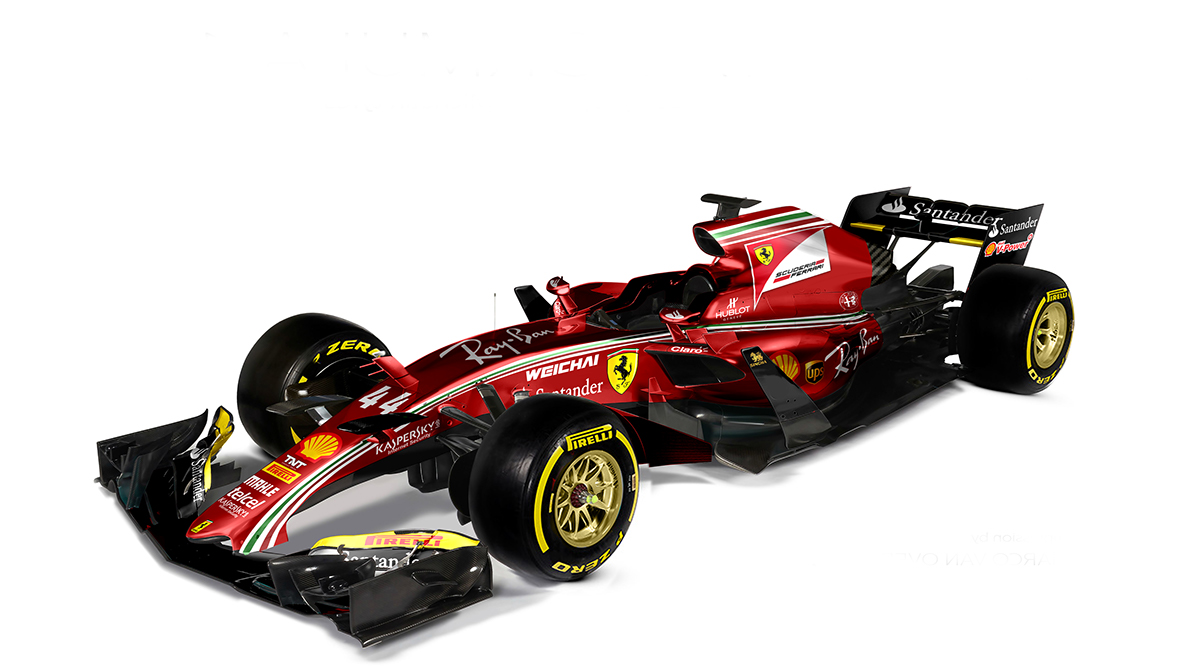
Concept artist Sean Bull has produced a vision of what Formula 1 could look like in 2017