
Monday, January 12, 2015


Friday, January 9, 2015
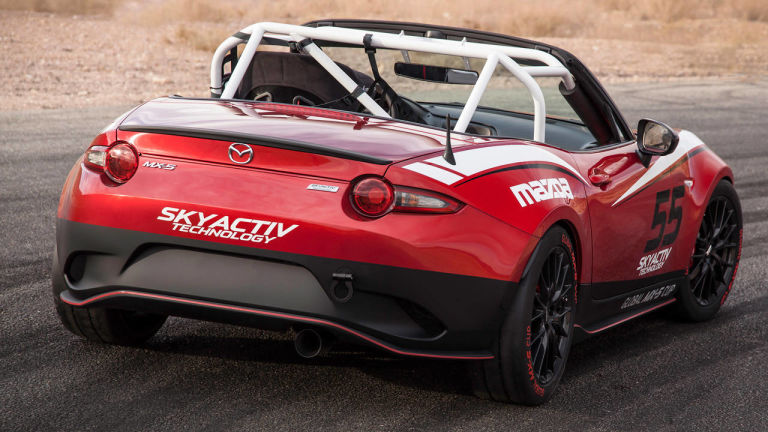
The 2016 Mazda MX-5 Miata Cup Car revealed at SEMA
The Miata Cup goes global.

Mazda revealed the Global MX-5 Cup car, based on the 2016 Miata, at SEMA today while simultaneously detailing a new one-make series that will run in North America, Europe, and Asia. The MX-5 Cup car will use the same 2-liter SkyActiv engine as the North American street car, but Mazda hasn't finalized the specifications or other components at this time.
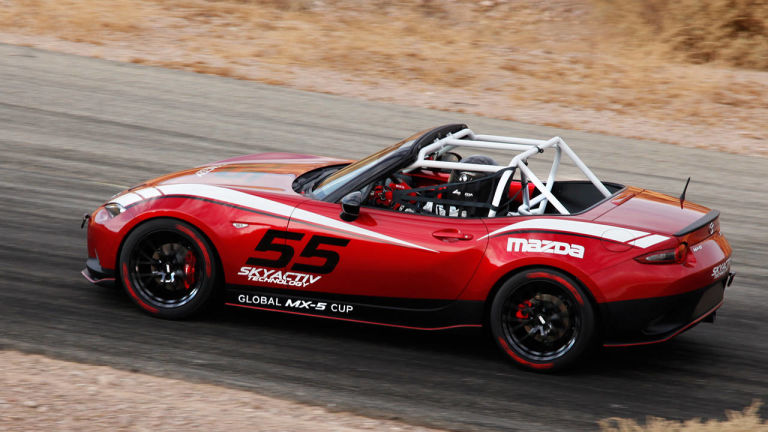
The 2016 cars won't run next year—third-generation NC Cup cars will continue for a final North American season. After that, the Global Cup championship begins, and the NCs won't be eligible for the championship (but they will be allowed to compete in club racing events).

Thursday, January 8, 2015
American Car Ornamentation - All you need to know !
The Buick Motor Company was originally incorporated in 1903, by David Dunbar Buick in Detroit, Michigan. Later that year, the struggling company was taken over by James H. Whiting who moved it to his hometown of Flint, Michigan.
Throughout the years, Buick hood ornaments were characterized by stylized versions of:
Female figures . . . Early 1930s
Locomotives . . . Late 1930's
Airplanes . . . Early 1940s
Gunsights . . . Late 1940s to Mid 1950s
Jetfighters . . . Mid to late 1950s
Buick 1930s Female Figure

Buick Hood Ornament circa 1930s
A "Winged Woman" On A 1941 Cadillac Convertible Coupe

1941 Cadillac
A Stylized "Woman/Rocket" On A 1955 Cadillac

1955 Cadillac
Chevrolet Hood Ornaments
Hood Ornamentation Where Speed Is Emphasized
In 1911, the Chevrolet Motor Company of Michigan was incorporated by Louis Chevrolet, a race car driver who eventually partnered with William Durant (orginal founder of GM) in 1915. Louis Chevrolet eventually parted ways but the namesake company grew to become General Motors' top-selling line.
In the early years, Chevrolet hood ornaments were characterized by stylized:
Eagle . . . Late 1920s to Early 1930s
Locomotive or locomotive/eagle . . . Late 1930s thorugh the 1940s
Eagle/airplane and an Impala . . . Early 1950s
Gunsights . . . Late 1950s
Late 1920's Chevrolet - Eagle Motif Atop A Radiator Cap

The Speed of A Locomotive Is Implied On This 1940s Chevrolet

The 1950s "Impala" Motif

An Eagle/Airplane On A 1950s Skyline

What Are Hood Ornaments Made Of?
Hood ornaments are usually cast in brass, zinc, or bronze and finished in a chrome plated finish. In the years when chrome plate was unavailable, they were plated in either silver or nickel. Some also incorporated other materials, such as plastic, while others incorporated a light bulb for illumination at night.
A 1950s Oldsmobile 88 Sporting A "Jet Plane" Hood Ornament

Hey, Here's A Hood Ornament That Needs A Name

Plymouth Hood Ornaments
Inspired By Sailing Ships
The Plymouth automobile was introduced in 1928 by the Chrysler Corporation. From the 1930s to the early 50s, Plymouth hood ornaments were typically charaterized by stylized sailing ships or schooners.
Yellow Plymouth With "Schooner" Hood Ornament

Red Plymouth With "Sailing Ship" Hood Ornament

Throughout the years, Buick hood ornaments were characterized by stylized versions of:
Female figures . . . Early 1930s
Locomotives . . . Late 1930's
Airplanes . . . Early 1940s
Gunsights . . . Late 1940s to Mid 1950s
Jetfighters . . . Mid to late 1950s
Buick 1930s Female Figure
Buick Hood Ornament circa 1930s
1950s "Gunsight" Hood Ornament On A Buick Eight

1950s Buick Eight
Cadillac Hood Ornaments
Hood Ornaments With A Female Influence
The Cadillac Automobile Company was founded in 1902 and was subsequently purchased in 1909 by General Motors. Over the following thirty years, Cadillac established itself as America's premier luxury car.
Throughout the years, Cadillac hood ornaments were characterized by stylized:
Woman with feathered wings . . . 1930s to Early 1940s
Woman/airplane . . . 1940s
Woman/rocket . . . 1950s
1950s Buick Eight
Cadillac Hood Ornaments
Hood Ornaments With A Female Influence
The Cadillac Automobile Company was founded in 1902 and was subsequently purchased in 1909 by General Motors. Over the following thirty years, Cadillac established itself as America's premier luxury car.
Throughout the years, Cadillac hood ornaments were characterized by stylized:
Woman with feathered wings . . . 1930s to Early 1940s
Woman/airplane . . . 1940s
Woman/rocket . . . 1950s
A "Winged Woman" On A 1941 Cadillac Convertible Coupe
1941 Cadillac
A Stylized "Woman/Rocket" On A 1955 Cadillac
1955 Cadillac
Chevrolet Hood Ornaments
Hood Ornamentation Where Speed Is Emphasized
In 1911, the Chevrolet Motor Company of Michigan was incorporated by Louis Chevrolet, a race car driver who eventually partnered with William Durant (orginal founder of GM) in 1915. Louis Chevrolet eventually parted ways but the namesake company grew to become General Motors' top-selling line.
In the early years, Chevrolet hood ornaments were characterized by stylized:
Eagle . . . Late 1920s to Early 1930s
Locomotive or locomotive/eagle . . . Late 1930s thorugh the 1940s
Eagle/airplane and an Impala . . . Early 1950s
Gunsights . . . Late 1950s
Late 1920's Chevrolet - Eagle Motif Atop A Radiator Cap
The Speed of A Locomotive Is Implied On This 1940s Chevrolet
The 1950s "Impala" Motif
An Eagle/Airplane On A 1950s Skyline
What Are Hood Ornaments Made Of?
Hood ornaments are usually cast in brass, zinc, or bronze and finished in a chrome plated finish. In the years when chrome plate was unavailable, they were plated in either silver or nickel. Some also incorporated other materials, such as plastic, while others incorporated a light bulb for illumination at night.
A 1950s Oldsmobile 88 Sporting A "Jet Plane" Hood Ornament
Hey, Here's A Hood Ornament That Needs A Name
Plymouth Hood Ornaments
Inspired By Sailing Ships
The Plymouth automobile was introduced in 1928 by the Chrysler Corporation. From the 1930s to the early 50s, Plymouth hood ornaments were typically charaterized by stylized sailing ships or schooners.
Yellow Plymouth With "Schooner" Hood Ornament
Red Plymouth With "Sailing Ship" Hood Ornament
Tuesday, January 6, 2015
Classic & Vintage Automobile Luggage
A real treat as we look into a very special carry category

When Carryology contributor Brian Park started some work with Spirited Automobiles, he was not quite ready for just how special a carry culture he would be introduced to. Thanks to the good folk there, we now have a small introduction to the world of classic and vintage automobile luggage to share. We hope you love it as much as we do…
Brian: We use cars to transport ourselves and, more often than not, our things. To this end our cars have trunks, folding seats, roof racks, armrest stow compartments and cup holders. However, before all these carry compartments were standard, automobile manufacturers supplemented their vehicles’ carrying capacities with luggage that strove to do justice to their vehicles. We’ve put together a brief history of the beautiful, unique luggage that can be found in classic and vintage automobiles.
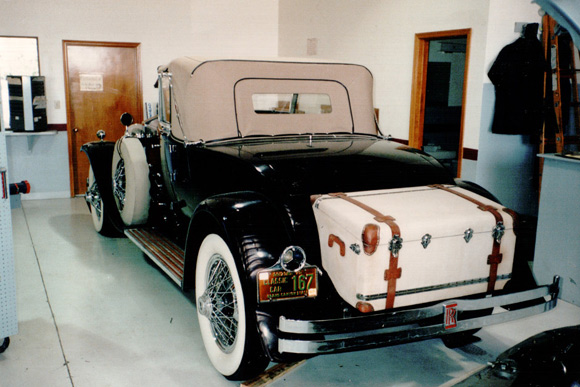
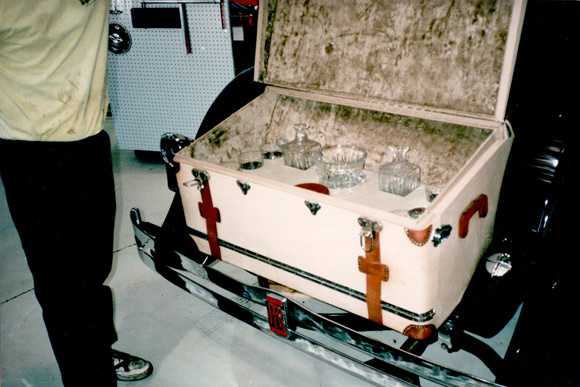
Many early automobiles did not have enclosed trunks, so manufacturers addressed their customers’ carrying needs by simply mounting traditional traveling luggage onto their vehicles. Like carriage makers, automobile manufacturers mounted trunks on the roofs and backs of their cars. The Rolls-Royce above has a very distinctive touring trunk. I can only assume that the storage drawers underneath the beautiful decanter set are full of expensive cigars and other luxurious vices.
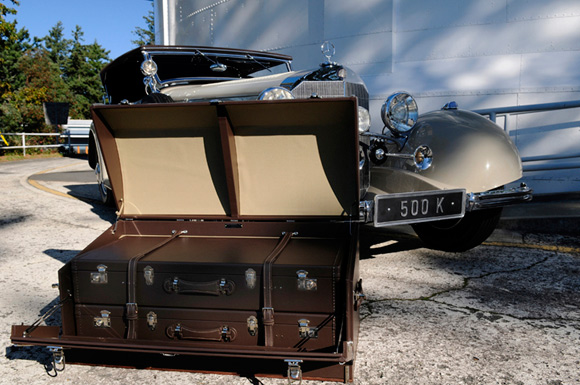
There was a period of overlap between mounted luggage and the modern enclosed trunk. The enclosed trunk offered manufacturers an additional challenge, as they had to build fitted luggage for their cars. This 1935 Mercedes-Benz 500K Touren Wagen has fitted luggage recreated by Taris Charysyn to the exact specifications of the original. Taris has a small workshop in upstate New York where he builds luggage for classic and vintage automobiles using the original techniques and materials. His luggage is indistinguishable from the originals, and his work restoring original luggage is very fine as well.

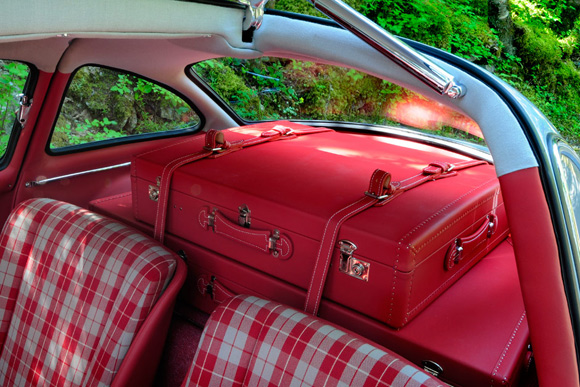
Post-war Mercedes-Benz luggage was made by Karl Baisch until 1958.
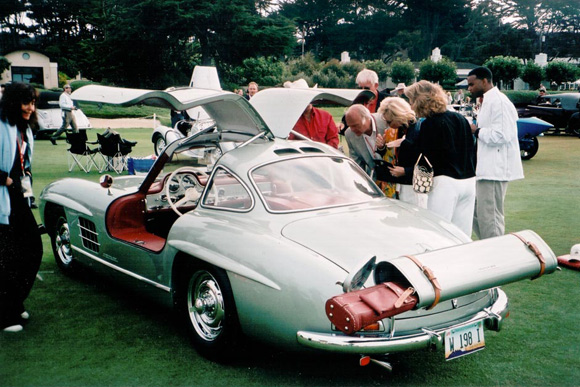
The golf bag carrier was an option from the factory on Mercedes-Benz 300SLs. The trunk is not large enough to accommodate a handbag, let alone a set of clubs. The design of this carrier is quite clever in that one can open the trunk without removing the carrier. This particular photo was taken at a concours over a decade ago. Today, a carrier like this on a 300SL would significantly increase its value. It is presently owned by 300SL restorer Mark Passarelli.
The rarest of luggage options on the 300SL was the ski rack. They made one, and it is owned by Frank Spellmann. The image introduces this post, or you can read about it in the article “1963 300SL Roadster”, by Frank Spellman, Frank Barrett, Star, July/August 2001 (archived at PaulRussell.com).
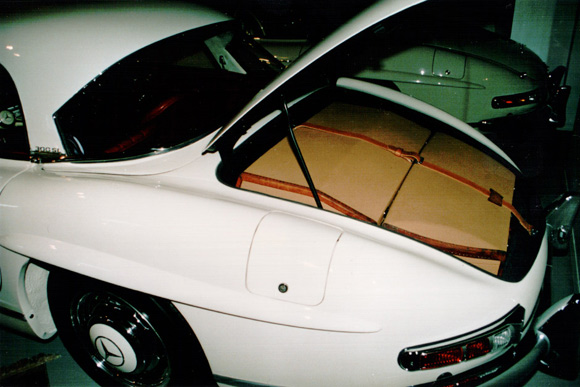
In 1959 Mercedes-Benz switched from Karl Baisch luggage to HEPCO. This later luggage was criticized for being of poorer construction than the artisanal work of Baisch. Although this 1964 300SL is fitted with its original HEPCO luggage, it is still quite a special car in that it has Chassis 003257. That is the second-last 300SL chassis constructed, but in fact the last car to leave the production line in early 1964. It was a US model Roadster that was delayed on the line to be converted to European specifications before being sold to a German client who, I believe, still owns it today.
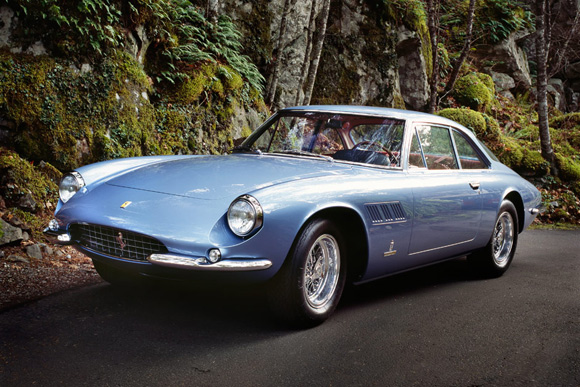

This 1964 Ferrari 500 Superfast Series I is another example of Taris Charysyn luggage.
Much of this luggage is not practical by today’s standards. Having to undo all kinds of buckles and then lug wheel-less bags through a hotel, or having to uncouple an enormous traveling trunk from the back of your car and get it onto an airplane, are daunting tasks. However this impracticality probably mattered less in the days when porters and bellboys were taking care of much of the carrying. Just as classic cars have value far beyond their driveability and lack of temperature controls, I think there is something intangibly amazing about this crafted luggage.
Brian Park and Robert Dening curate a collection of vintage and classic cars and run a blog about it called Spirited Automobiles. We highly recommend checking it out.
Saturday, January 3, 2015
McLaren Sports Series rumored to produce 'well over' 500 horsepower

McLaren uses a
3.8-liter twin-turbo V8 in its two current cars, and that engine will
feature in its third, entry-level car, too. It registers 727 horsepower
in the P1, 641 hp in the 650S, and, while it's only speculation for the moment, Autocar reports that the coming McLaren Sports Series
will be tuned to make "well over" 500 horsepower. Company CEO Mike
Flewitt told the magazine, "Like our other models, this one will have a
higher power-to-weight ratio and better performance figures than any
rival."
Starting price for the Sports Series – which will almost certainly get a more formal alphanumeric name –could come in around 130,000 pounds in the UK (circa $200k USD including British taxes), making it a 65-thousand-pound discount compared to the 650S. But with its overall size and weight expected to come close to the more expensive coupe, the Sports Series will go without the active aerodynamics and trick suspension of its elder sibling in order to create a performance gap. The report also says that since McLaren expects a much higher instance of use as a daily driver, a different door operation and thinner sill will make ingress and egress easier. To make sure it stands out in a growing field of race-tested competitors, McLaren will launch a GT3 model, but it will go the other way, too, with a turismo version "aimed at long-distance touring."
If it does have 550 horsepower, how will the 130,000-pound coupe stack up on paper against its UK competitors? It will be more expensive than all of them, but also more powerful, and unless McLaren loses the plot, it will likely be more surgical around a track than any of them, as well. The 520-hp Porsche 911 Turbo costs 120,598 pounds, the 542-hp Audi R8 V10 Plus costs 114,835 pounds, and the 510-horsepower Mercedes AMG GT costs 109,160 pounds. We'll know where the Sports Series stacks up when its unveiled at the New York Auto Show.
Starting price for the Sports Series – which will almost certainly get a more formal alphanumeric name –could come in around 130,000 pounds in the UK (circa $200k USD including British taxes), making it a 65-thousand-pound discount compared to the 650S. But with its overall size and weight expected to come close to the more expensive coupe, the Sports Series will go without the active aerodynamics and trick suspension of its elder sibling in order to create a performance gap. The report also says that since McLaren expects a much higher instance of use as a daily driver, a different door operation and thinner sill will make ingress and egress easier. To make sure it stands out in a growing field of race-tested competitors, McLaren will launch a GT3 model, but it will go the other way, too, with a turismo version "aimed at long-distance touring."
If it does have 550 horsepower, how will the 130,000-pound coupe stack up on paper against its UK competitors? It will be more expensive than all of them, but also more powerful, and unless McLaren loses the plot, it will likely be more surgical around a track than any of them, as well. The 520-hp Porsche 911 Turbo costs 120,598 pounds, the 542-hp Audi R8 V10 Plus costs 114,835 pounds, and the 510-horsepower Mercedes AMG GT costs 109,160 pounds. We'll know where the Sports Series stacks up when its unveiled at the New York Auto Show.
Thursday, December 18, 2014
Monday, December 8, 2014
Lexus files to copyright LC 500 nameplates
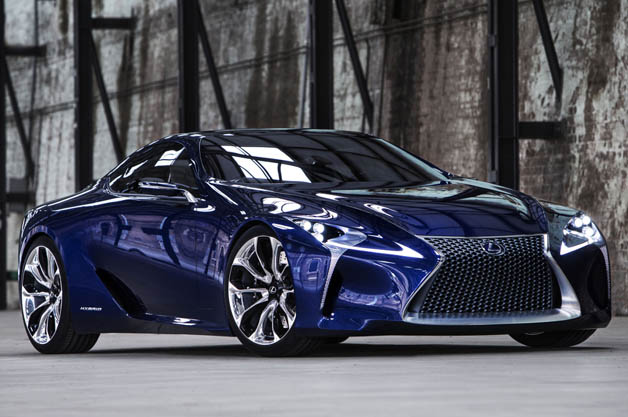


Some automakers already slap a production-ready name on their concepts, but not Lexus. The Japanese automaker typically labels its show cars with the letters LF-XX. So when we heard that Toyota had green-lit the LF-LC concept for production, we naturally started wondering what name the production version would carry. But if the latest intel is any indication, we can stop wondering.
According to Lexus Enthusiast, the automaker has filed to trademark the names LC 500 and LC 500h in a variety of markets – including the United States, Canada and Australia. The application tells us a number of things: first of all, that the LF-LC will retain that second set of letters along the road to production (like theNX but unlike other recent Lexus concepts). And secondly, it indicates what engines we can expect to find under the hood.
The 500 designation would seem to suggest that the base version of Lexus' upcoming halo sports car will pack the 5.0-liter V8 from the RC F. The bigger question mark is over the hybrid version. Current gasoline-electric models in the company's lineup include the RX 450h (based on a 3.5-liter V6) and the LS 600h (with a 5.0-liter V8). For the LC 500h, Lexus could be planning a more potent electric motor to mate to the 3.5L V6, or planning a new powertrain altogether.
According to Lexus Enthusiast, the automaker has filed to trademark the names LC 500 and LC 500h in a variety of markets – including the United States, Canada and Australia. The application tells us a number of things: first of all, that the LF-LC will retain that second set of letters along the road to production (like theNX but unlike other recent Lexus concepts). And secondly, it indicates what engines we can expect to find under the hood.
The 500 designation would seem to suggest that the base version of Lexus' upcoming halo sports car will pack the 5.0-liter V8 from the RC F. The bigger question mark is over the hybrid version. Current gasoline-electric models in the company's lineup include the RX 450h (based on a 3.5-liter V6) and the LS 600h (with a 5.0-liter V8). For the LC 500h, Lexus could be planning a more potent electric motor to mate to the 3.5L V6, or planning a new powertrain altogether.
Saturday, November 8, 2014
Tuesday, October 28, 2014
CRISIS? WHAT CRISIS? F1 DIGS HEAD IN THE SAND

Formula 1 is a money drain
Talk of financial crisis in Formula 1 is nothing new but the absence of back-markers Caterham and Marussia from this week’s United States Grand Prix after they went into administration has concentrated minds.
For the first time since 2005, there will be only nine teams in the paddock and some of them are competing in straitened circumstances.
It is a long-standing joke that the best way to make a small fortune in Formula 1 is to start with a large one, but securing even a basic budget is proving increasingly difficult in a sport that burns through cash at eye-watering speed.
Sauber have made no secret of their problems while Force India owner Vijay Mallya continues to make headlines after being declared a willful defaulter last month by state-run lender United Bank of India.
Speculation has also swirled around Lotus, who have had serious financial problems. The signs of trouble have been there for years, with regular warnings and calls for cost caps along the way. The plight of Caterham and Marussia, who are both hoping to find a buyer, comes as no surprise.

End of the road for Caterham
“It seems that the chickens have come home to roost,” Max Mosley, the former president of the governing International Automobile Federation, told the Times newspaper on Monday.
Mosley helped three new teams into the sport at the start of the 2010 season, after a manufacturer exodus, with a promise of budget caps and regulation tweaks to ensure they could compete on a level playing field.
The $64.55 million annual budget cap never happened, with the big teams refusing to countenance such a measure, and by the end of the 2010 season Mosley spelled out the risks implicit in that rejection.
“For 2011, you need $100 million, with $30 or $40 million from Bernie Ecclestone and perhaps 20 to 25 million from sponsors or the drivers,” he declared at the time. “I’d say six teams are wondering where the rest is coming from. It’s quite possible we will lose two or three teams.”
The Briton’s words would have been just as valid now, “The budget cap was absolutely the right thing to do. Clearly no sport can survive properly when some teams are spending four and five times more than the smallest. There cannot be proper competition that way.”

End of the road for Marussia
Caterham, which started life as Lotus Racing under Malaysian entrepreneur Tony Fernandes, was supposedly sold in July and went into administration last week amid a paper storm of accusations and counter-claims.
Marussia, which made its debut in 2010 as Virgin Racing, followed on Monday for financial reasons. Spanish-based HRT folded at the end of 2012.
The U.S. Grand Prix will be the first race since 2009 without any of those new teams and risks being remembered as the end of a bold experiment that might have succeeded but ultimately was doomed by vested interests and a lack of vision.
Of the three, only Marussia ever scored any points and that was in May when French driver Jules Bianchi finished an astonishing ninth for a team so hard up it could not afford celebratory champagne.
Bianchi now lies critically injured in a JAPANese hospital after an horrific crash in Japan three weeks ago, a personal tragedy that was also a disaster for the team.

HRT long gone
Even without the nightmare of Suzuka, Marussia were on borrowed time with the team desperately trying to stay afloat in a very deep ocean.
Their budget of about $80.69 million was generally regarded as the smallest of all the teams and compared to $200 million plus for the likes of Mercedes and Ferrari.
Formula One has seen more than 120 teams come and go, with Ferrari the only one to have stayed the course since the championship started in 1950. Some 51 never scored a point.
To some, that is the nature of a sport that carries no passengers and in which only the fittest survive. Just as the graveyards of Europe are filled with indispensable men, so too the Formula One scrapheap is piled high with illustrious names once considered immortal.
But there are many who question whether teams should still be folding in a sport with an annual turnover of more than $1.5 billion and an annual prize fund of more than $750 million.

Formula 1 grid shrinking
Part of the problem lies in the distribution of that fund, with the big teams taking the lions’ share and some, such as Ferrari, getting additional special bonuses.
“In every industry, successful companies stay in the market, and less successful ones disappear,” said Paola Aversa of London’s Cass Business School.
“However, if we consider that in F1 on average one company goes under every year…and that even the successful firms struggle to break even, we must wonder whether the business model of this industry is actually sustainable.
“We should ask whether the distribution of wealth is proportionate to a point that allows all the players, both administrators and teams, to get a fair share of the pie and thus achieve a reasonable turnover.”
Aversa pointed to the major American sports as an example of a business model that ensured even small teams could compete. Whether Formula 1, where a small team’s engine supply alone costs around $20-million a year, has the will to change remains another matter.
The talk now is increasingly about the big teams possibly running three cars rather than two, a move that would only increase the problems of smaller outfits that risk being squeezed even further out of the points.
The FIA has made no substantial headway in reining in costs. Now under former Ferrari boss Jean Todt, the governing body announced last year that a cost cap would be introduced for 2015.
In April, Todt said the plan had been dropped because the leading six teams did not believe it was viable. (Reuters)
Monday, October 27, 2014
FORMULA 1 SET FOR THREE-CAR TEAMS AS CRISIS LOOMS LARGE

Three car teams might become a reality in 2015
Formula 1 is rapidly sliding into crisis and having to reinvent its very DNA as struggling backmarker teams begin to succumb to collapse and more could well follow suit.
HRT folded in 2012, and now Formula 1’s two other newest teams Caterham and Marussia are in the throes of financial administration and oblivion.
Organisers of next weekend’s United States Grand Prix look set to welcome just 9 teams to an 18-car grid, unprecedented since BAR-Honda was banned for a time almost a decade ago.
“It’s a fantastic sport,” departed Caterham founder Tony Fernandes said on Twitter at the weekend. “Bernie (Ecclestone) has done an amazing job but it needs to relook at itself.”
And former HRT driver Narain Karthikeyan added: “Formula 1 just too expensive and completely unsustainable for minnows.”
Max Mosley, the former FIA president who warned of a looming crisis in Formula 1 years ago, quietly pointed a finger at his successor Jean Todt.

HRT went bust at the end of the 2012 season
“It seems that the chickens have come home to roost,” Mosley is quoted by The Times.
For now, Formula 1 and its race promoters will have to cope with a diminished grid as big teams are promised at least two months notice before having to field three-car teams.
Dipping below 20 cars is the trigger for the three-car stipulation, giving Ecclestone a buffer so as not risking his contractual promise of at least 16-car grids to the big-paying race promoters.
But with Caterham and Marussia looking set to fall, it now appears possible Formula 1 will lose even more small-sized independent teams, particularly after the sport baulked earlier this year at introducing radical cost-cutting or even a cost cap.
“Formula 1 is not so great that it cannot fail,” Sauber team boss and co-owner Monisha Kaltenborn is alarmingly warning, according to Italy’s La Stampa.
It is not only the Swiss team that is worried. Germany’s Auto Motor und Sport claims that Force India needs to make an engine payment to Mercedes by Monday or risk joining Caterham and Marussia in missing the US Grand Prix.

F1 grid shrinking
And Force India deputy boss Bob Fernley admitted more teams are in danger of collapse, “We’ve had three new teams since 2010, and all three have collapsed. The writing was on the wall from the beginning.
“Only five teams have a say in the running of Formula 1 — we’ll lose more teams if we carry on like this,” said Fernley.
If the Formula 1 grid keeps diminishing, three-car entries are inevitable. Auto Motor und Sport said Ferrari, Red Bulland McLaren are lined up by Ecclestone as first in the queue to start supplying third cars.
If any of that trio declines, Mercedes is reportedly the next in line. Ferrari and Red Bull have apparently already given Ecclestone the green light, while McLaren for the moment is hesitating, perhaps due to uncertainty about who should pay for the third car — Ecclestone or the team.
Red Bull’s Helmut Marko told Sport Bild he does not see a problem, “We have the capacity at Milton Keynes, and it would also solve our luxury problem of having too many good drivers for too few cars.”
And Karthikeyan, who only drove for backmarker teams in his Formula 1 career, thinks the slowest cars will not be missed, “18 cars in Austin, but sadly no one will miss the absentees once the opening lap is completed without incident. That’s the truth.” (GMM)
LOTUS SPONSOR: FERNANDO WILL LOOK GOOD IN BLACK & GOLD

Fernando Alonso in black & gold as tweeted by Burn
A major sponsor of the Lotus team has stirring up Formula 1 silly season natter and compounding the already confusing speculation about Fernando Alonso’s next move.
Most insiders believe the Spaniard and Ferrari have already dissolved their contract, paving the way for Sebastian Vettel to join Kimi Raikkonen at the Italian team in 2015.
Alonso’s future, however, remains unclear, amid claims he will either switch to McLaren-Honda for a year before bidding for a Mercedes seat in 2016, or simply take a sabbatical.
But it may not be as simple as that. Marca claims the delay in an official announcement by Ferrari is because the only way Maranello can clear Alonso’s seat for Vettel is by paying the Spaniard $50 million to compensate for the remainder of his deal.
The latest reports are that, with Stefano Domenicali already headed to Ingolstadt, Audi could be set to quit Le Mans and start up a Formula 1 team centred around Alonso in 2015.

Fernando Alonso has history with Enstone
France’s Auto Hebdo quoted a spokesman for the VW-owned marque as playing down the reports.
“These reports have been around for several years,” the spokesman said. “It is still only pure speculation without any foundation. We are engaged in the WEC, DTM and GT, and we will add the Audi Sport TT Cup to our programme in 2015.”
Meanwhile, although Lotus says it on the verge of re-signing Romain Grosjean for 2015, the Enstone team’s Coca Cola-owned energy drink sponsor Burn is now getting mischievously involved in the Alonso speculation.
“We think Alonso could look great in black and gold, don’t you?” Burn said on Twitter, having photoshopped an image of Alonso wearing Lotus Formula 1 overalls.
Notably Alonso’s career has been intrinsically linked with Enstone, where Lotus are based, as he won the 2005 and 2006 Formula 1 world titles when the current team’s ancestors – Renault – were still in Formula 1 in a works
Sunday, October 26, 2014
Thursday, October 23, 2014
ECCLESTONE HITS BACK AT TEXAS SPEEDWAY BOSS CRITICISM

Formula 1 freight in transit
Formula 1 supremo Bernie Ecclestone has hit back at Eddie Gossage, the president of Texas Motor Speedway, after the latter made disparaging remarks regarding the clash of dates between the grand prix in Austin and a NASCAR race at TMS.
Ecclestone told PA Sport, “We’ve a small problem that [NASCAR] don’t have – we have six jumbo jets to move around all our equipment, and we have to find the most sensible way to use them to do that.”
Earlier this week Gossage attacked Ecclestone with regards to the clashing dates in Texas, “I absolutely think it’s foolish. Nobody wins. It’s a shot fired by Formula 1 at NASCAR. I can’t say that I was surprised because Bernie Ecclestone does a lot of foolish things.”
“It’s just not smart. There are 52 weeks in the year. But that was the only weekend that F1 could make it work in Austin, Texas? Give me a break. It wouldn’t have happened if [the US GP organisers] had the strength and the fortitude to stand up and say no,” added Gossage.
Ecclestone explained the situation from an F1 perspectve, “The race prior to the one in the US is in Russia, in Sochi. We’ve never been before, and we have to get out of there and into Austin. That is probably a lot easier than trying to get into Brazil, and then we have to get out of there [Sao Paulo] to go to Abu Dhabi.”
“So he [Gossage] is extremely lucky he doesn’t have to do what we have to do. I’ve also spoken to the people that run the race at COTA {Circuit of the Americas} and their position is that they believe the NASCAR crowd is a different crowd to F1, different people, different customers.”
“At the end of the day they run a domestic series in America – we run a World Championship,” concluded Ecclestone.
The United States Grand Prix weekend takes place at Circuit of the Americas, in Austin, from 31 October to 2 November. On the same weekend the AAA Texas 500, the eighth race in the Chase for the 2014 NASCAR Sprint Cup, takes place at Texas Motor Speedway.
Sunday, October 12, 2014
Friday, October 10, 2014
Sochi FP2: Hamilton leaves them in his dust

Lewis Hamilton fastest on day one at Sochi
The championship leader’s best time of 1:39.630 in Free Practice 2 was a massive 0.894 of a second faster than his closest rival, during the afternoon session, and almost a second up on title rival and Mercedes teammate Nico Rosberg who ended the session fourth fastest.
Earlier Rosberg made history as the first Formula 1 driver to set a timed lap at the inaugural Russian Grand Prix in the morning session.
The Briton, who leads Rosberg by 10 points in the world championship standings after winning the last three races, went top of the timesheets in a slightly shortened session – the red flag came out eight minutes from the end when Australian Daniel Ricciardo’s Red Bull halted with a power unit failure.

Kevin Magnussen second fastest
McLaren‘s Jenson Button was the early pacesetter as drivers got to grips with a layout compared to the former Valencia street circuit and Singapore, with the 2009 champion ending the morning as the third fastest.
He also collected two fines totalling 1 100 euros for pitlane speeding and was sixth fastest in the second session.
Ferrari‘s Fernando Alonso was fourth and third in the two sessions, with Danish rookie Kevin Magnussen, Button’s teammate, fifth and then second in the afternoon.
The only Russian regular, Toro Rosso’s 20-year-old rookie Daniil Kvyat, followed up seventh in the morning with eighth after lunch.
That was still ahead of both Red Bulls, his 2015 employers, with four times champion Sebastian Vettel ninth after reporting a loss of power on the straight and Ricciardo 13th.

Fernando Alonso was third fastest
Williams had a disrupted opening session when a problem with a tyre blanket damaged a set of Valtteri Bottas’s tyres, limiting his running.
All drivers took to the track with stickers of support for Jules Bianchi, Marussia’s French driver who was severely injured in a crash in Japan last Sunday and remains in critical condition.
Marussia announced before the session that they would have only one car running this weekend, with Bianchi’s assembled and left in the garage as a mark of respect.
Chilton ended the first session with the slowest time but picked up speed in the afternoon, “I don’t know how to put into words how truly devastated I am by what has happened to Jules.”
“It is going to be a very emotional weekend for the whole team, but we will try to get through it and keep praying for Jules.”
Russian Grand Prix, Free Practice 2 at Sochi Autodrom – Friday, 10 October 2014
| Pos | No | Driver | Team | Time | Gap | Laps |
|---|---|---|---|---|---|---|
| 1 | 44 | Lewis Hamilton | Mercedes | 1:39.630 | 27 | |
| 2 | 20 | Kevin Magnussen | McLaren-Mercedes | 1:40.494 | 0.864 | 32 |
| 3 | 14 | Fernando Alonso | Ferrari | 1:40.504 | 0.874 | 32 |
| 4 | 6 | Nico Rosberg | Mercedes | 1:40.542 | 0.912 | 30 |
| 5 | 77 | Valtteri Bottas | Williams-Mercedes | 1:40.573 | 0.943 | 33 |
| 6 | 22 | Jenson Button | McLaren-Mercedes | 1:40.718 | 1.088 | 32 |
| 7 | 19 | Felipe Massa | Williams-Mercedes | 1:40.731 | 1.101 | 30 |
| 8 | 26 | Daniil Kvyat | STR-Renault | 1:41.108 | 1.478 | 32 |
| 9 | 1 | Sebastian Vettel | Red Bull Racing-Renault | 1:41.396 | 1.766 | 30 |
| 10 | 25 | Jean-Eric Vergne | STR-Renault | 1:41.531 | 1.901 | 33 |
| 11 | 7 | Kimi Räikkönen | Ferrari | 1:41.630 | 2.000 | 24 |
| 12 | 27 | Nico Hulkenberg | Force India-Mercedes | 1:41.677 | 2.047 | 27 |
| 13 | 3 | Daniel Ricciardo | Red Bull Racing-Renault | 1:42.061 | 2.431 | 25 |
| 14 | 11 | Sergio Perez | Force India-Mercedes | 1:42.090 | 2.460 | 29 |
| 15 | 99 | Adrian Sutil | Sauber-Ferrari | 1:42.233 | 2.603 | 31 |
| 16 | 8 | Romain Grosjean | Lotus-Renault | 1:42.892 | 3.262 | 30 |
| 17 | 13 | Pastor Maldonado | Lotus-Renault | 1:42.905 | 3.275 | 33 |
| 18 | 21 | Esteban Gutierrez | Sauber-Ferrari | 1:43.055 | 3.425 | 33 |
| 19 | 9 | Marcus Ericsson | Caterham-Renault | 1:44.135 | 4.505 | 22 |
| 20 | 4 | Max Chilton | Marussia-Ferrari | 1:44.530 | 4.900 | 29 |
| 21 | 10 | Kamui Kobayashi | Caterham-Renault | 1:44.952 | 5.322 | 27 |
Thursday, October 2, 2014
Monday, September 29, 2014
Saturday, September 27, 2014
Wednesday, September 24, 2014
Tuesday, September 23, 2014
Monday, September 15, 2014
Subscribe to:
Posts (Atom)